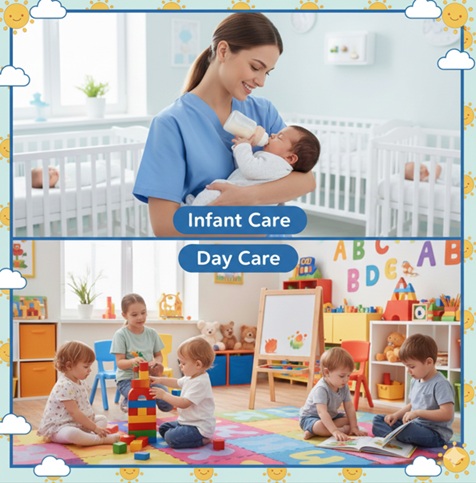
Looking for reliable child daycare near me starts with one clear step: identify licensed facilities that match your schedule, care preferences, and safety standards. You can quickly narrow options by checking licensing, staff-to-child ratios, and recent inspection or parent-review summaries to find safe, age-appropriate care close to home.
You’ll learn practical ways to compare programs, what questions to ask on a tour, and which features matter most for your child’s development and your peace of mind. Use this guide to turn a long list of names into a short list of trustworthy choices you can visit and decide between confidently.
Finding the Best Child Daycare Near Me
You want safe, child daycare nearby care that fits your schedule, budget, and parenting priorities. Focus on location, staff qualifications, daily routines, costs, and legal status when comparing providers.
Local Child Daycare Options
Look for licensed centre-based programs, licensed home-based providers, and before/after-school programs within a 15–30 minute drive of your home or workplace. Use local directories and municipal search tools to filter by age group, hours, and immediate availability.
Check whether the program participates in local subsidy or CWELCC-type fee reduction schemes if cost matters. Confirm operating hours and holiday closures to match your work schedule.
Visit at least two different types of providers — a centre and a licensed home caregiver — to compare group size, indoor/outdoor space, and pick-up logistics. Take photos or notes on arrival/departure procedures and parking for day-to-day convenience.
How to Evaluate Daycare Facilities
Observe staff-to-child ratios and how caregivers interact with children during drop-off and free play. Ask for sample daily schedules to see balance of sleep, meals, structured learning, and outdoor time.
Request staff resumes, turnover rates, and background-check policies. High turnover or vague hiring practices signal instability. Verify medication, illness, and emergency procedures are written and practiced.
Assess cleanliness, safe equipment, and age-appropriate materials. Talk with current parents about communication frequency, incident reporting, and how the centre handles behavioral challenges. Use a short checklist when touring: ratios, credentials, daily routine, safety, parent communication.
Licensing and Accreditation Requirements
Confirm the provider’s license status with your provincial or municipal registry and review the most recent inspection report for violations or orders. Licensing standards set minimums for ratios, staff training, and facility safety; accreditation adds voluntary quality benchmarks such as curriculum and continuous improvement.
Ask whether teachers hold recognized early childhood education (ECE) certificates and whether first aid/CPR certifications are current. Check for formal policies on vaccinations, staff background checks, and criminal-record disclosures.
Keep copies of the license number, inspector contact, and written policies. These documents protect you and help you escalate concerns to regulators if necessary.
Features and Benefits of Local Child Daycare
You get structured learning, consistent supervision, and measurable safety practices that support daily routines and school readiness. Expect clear staff qualifications, targeted activities by age, and secure drop-off/pick-up procedures at quality local centers.
Curriculum and Activities
Look for programs that list specific daily blocks: free play, guided learning, circle time, outdoor gross-motor, and nap/quiet periods. Centers that serve infants and toddlers should show age-specific goals — sensory exploration for 6–18 months, language and turn-taking for 2–3 years, and pre-literacy and number concepts for preschoolers.
Ask whether they use a named curriculum (Montessori, Creative Curriculum, etc.), how staff document progress, and how often they send samples or reports. Check if offerings include music, art, STEM play, and outdoor time; these promote motor skills, creativity, and problem solving. Confirm class sizes and child-to-staff ratios to ensure activities are feasible and individualized.
Safety and Security Measures
Verify secure entrance controls: keyed or coded entry, staff monitoring at arrival, and swept visitor logs. Confirm child-safe layouts — fenced outdoor areas, age-appropriate furniture, and locked medication storage. Ask about emergency planning: posted evacuation maps, monthly fire drills, and staff CPR/First Aid certification renewal schedules.
Inquire how centers handle illness and reporting: clear exclusion policies, documented handwashing routines, and temperature checks or wellness screenings if required. Find out their pickup verification method — photo ID checks, PIN codes, or designated authorized pick-up lists — to reduce unauthorized release risks. Insurance and licensing details should be available on request.
Qualified Care Providers
You should expect staff with documented training and experience tied to the age groups they supervise. Look for leads with early childhood education credentials or CDA certificates, aides with background checks, and ongoing professional development logs. Ask for staff-to-child ratios and whether substitutes meet the same qualifications.
Confirm that the center performs state-required background screenings, reference checks, and fingerprinting where applicable. Check turnover rates; lower turnover means more consistent relationships for your child. Also ask how the center supports staff training in behavioral guidance, inclusive care practices, and curriculum implementation to ensure quality, predictable care.