When a business buys a dough maker, it is really buying consistency. A reliable machine keeps kitchens on schedule, reduces staff fatigue, and protects margins. That is why first-dough-maker manufacturers that invest in strong motors, food-safe materials, and real after-sales support tend to win repeat orders.
This guide is built for procurement teams, shopping malls, eCommerce websites, distributors, and kitchenware sellers. It explains what buyers mean by a “first” dough maker, compares notable makers, shares a quality checklist, and breaks down pricing and OEM options. It also flags common sourcing mistakes so buyers can avoid returns and downtime while choosing first-rate manufacturers with confidence.
Easy-to-rank LSI keywords to support this topic (and use naturally):
- dough kneading machine manufacturers
- commercial dough mixer suppliers
- industrial dough kneader
- electric dough maker machine
- atta kneader machine
- dough mixer factory
Intro: Why choosing the right manufacturer matters
A dough maker can look perfect in photos and still fail in a real kitchen. The “hidden” difference is usually inside the machine: motor protection, transmission strength, food-contact materials, and whether spare parts are actually available.
For businesses, the safest path is to evaluate suppliers like a system: product quality, warranty clarity, parts access, and support speed. Procurement teams that build a simple checklist (and stick to it) usually end up with fewer returns, fewer service calls, and happier kitchen staff.
What Is a “First Dough Maker” (and who is it best for)?
A “first” dough maker is often used as a market label for pioneer-style dough kneaders. In some regions, it is also used by first-dough-maker manufacturers as a heritage or first-mover claim. Functionally, it is a motor-driven machine that mixes flour and water into uniform dough using blades, hooks, or a spiral tool.
It fits buyers who need repeatable dough without relying on manual kneading.
- Food courts and mall outlets that want fresh dough without extra prep staff
- Restaurants and pizza shops that run daily batches
- eCommerce sellers that stock home-capacity models
- Small bakeries and caterers that need consistent results
Home vs commercial dough makers (key differences)
Home units focus on compact size, simpler controls, and quick cleaning. Commercial units focus on torque, safety guards, and serviceability. For commercial buyers, the strongest first dough-maker manufacturers are the ones that can prove spare parts access and fast warranty response time—because downtime costs more than the machine.
Top Brands (Shortlisted & Compared)
The shortlist below mixes a regional pioneer example with recognized commercial mixer brands and spiral-mixer specialists. It helps buyers benchmark build quality, support, and positioning before negotiating with a first dough-maker supplier or going direct to a first dough-maker factory.
| Manufacturer/Brand | Type | Typical Capacity | Build Snapshot | Best For |
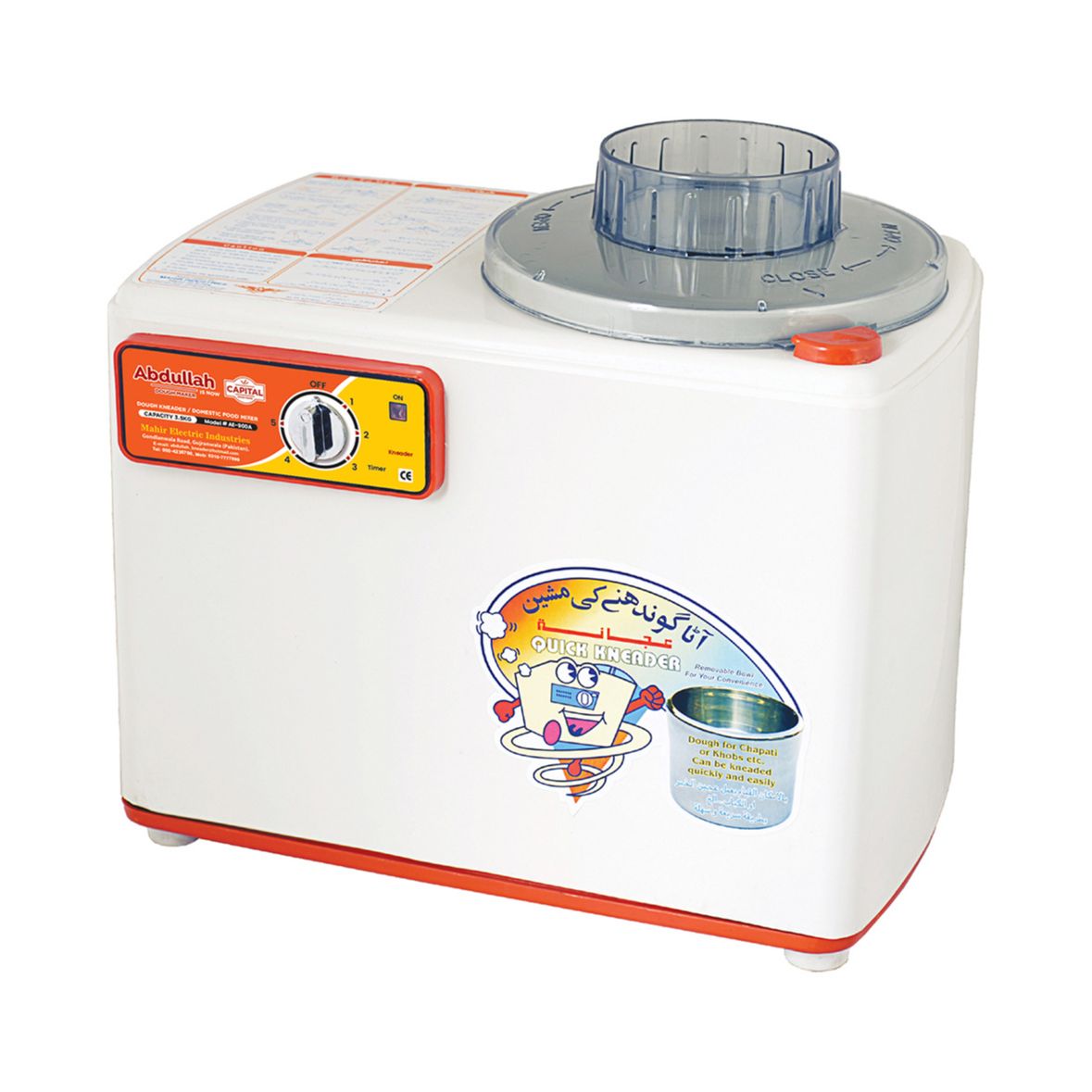
| Abdullah Kneaders (Pakistan) | Home/light commercial | ~3.5–5 kg class | Thermally protected motor; steel bowl options | Households, small shops |
| Hobart | Commercial | Wide range | Heavy-duty commercial construction | High-volume kitchens |
| KitchenAid | Home/prosumer | Multiple bowls | Strong home ecosystem; attachments | Premium home baking |
| Globe Food Equipment | Commercial | Multiple sizes | Commercial mixer lines for foodservice | Restaurants, bakeries |
| Varimixer | Commercial | Multiple sizes | Ergonomic, heavy-duty mixer focus | Institutions, bakeries |
| Sigma (Italy) | Commercial spiral | Multiple sizes | Spiral mixer heritage for dough | Pizza, artisan dough |
| Doyon (spiral models) | Commercial spiral | Multiple sizes | Spiral action for consistent dough | Artisan bakeries |
Warranty terms from First Dough Maker Manufacturers vary by region and model, so buyers should request written coverage before paying, including what parts are covered, claim steps, and typical service timelines.
Quick notes for buyers
- Use the table to set minimum standards for motor protection, bowl material, and safety.
- Compare local availability and service through the chosen first dough-maker supplier.
- If buying direct, confirm the seller is a true first dough-maker factory (not a trading middleman).
How to Choose the Best Manufacturer (Buyer Checklist)
This checklist helps teams compare first doughker-maker manufacturers in a way that reduces risk and improves long-term uptime. It is also useful for eCommerce sellers who want to cut returns and protect brand reviews.
Build quality
A stainless steel bowl is a safe default for food contact and cleaning. Buyers should also check base stability and housing strength, since excessive vibration often leads to early wear.
Quick check: If a unit “walks” on the counter during thick dough mixing, it is a red flag for long-term use.
Motor & performance
For daily use, thermal cut-off and overload protection matter. Many commercial buyer guides also treat emergency stops and bollards as core safety features on modern mixers.
If a seller cannot explain motor protection in plain language, that is a sign to push for better documentation—or consider another first-dough maker factory.
Capacity options (2L / 5L / 7L / 10L+)
Capacity should be measured in dough weight, not only bowl liters. A 7L–10L class unit can work for many small bakery counters, while dense pizza dough often performs better in a spiral mixer.
Practical tip: Ask the supplier for a recommended “maximum dough weight” for the exact dough type being used (pizza, whole wheat, soft dough). That one detail prevents a lot of motor complaints.
Safety features
For commercial settings, bowl guards or lid locks reduce injury risk. Thermal protection helps prevent motor burnouts when staff overload the bowl during rush hours.
Spare parts availability
Ask for parts lead times for gears, belts, bowls, hooks, and blades. A dependable first dough-maker supplier should be able to quote spare parts quickly and in writing, not “after the order ships.”
After-sales support
The strongest first-dough maker manufacturers back warranties with reachable support channels and service partners. For mall kitchens and chains, response time matters more than a small discount.
A smart procurement team also checks:
- Is there a service center in the target region?
- Are parts stocked locally or imported after a breakdown?
- Does the supplier share an escalation contact for urgent issues?
Certifications
Depending on the market, buyers may request ISO-style quality systems and CE marking for certain regions. Certificates should match the company name and product category, and they should be current—not outdated scans.
Price Guide (What buyers should expect)
Pricing is driven by build quality, capacity, and support. When comparing first dough maker manufacturers, buyers should think in terms of “total cost of ownership” rather than only the checkout price—especially if the machine will run daily.
What affects cost
- Dough capacity and motor torque
- Transmission strength (metal vs weaker components)
- Food-contact materials and bowl quality
- Included attachments and tools
- Warranty length and spare parts access
Typical ranges by segment (simple benchmark)
- Home/light duty: lower upfront cost, best for smaller batches
- Commercial countertop: mid-range, stronger motors and guards
- Spiral mixers: higher range, built for dense dough and daily volume
Cost vs value: what not to compromise on
Food-safe materials, motor protection, and real spare parts access are non-negotiable. A cheaper unit becomes expensive if it fails during peak hours, triggers refunds, or delays store operations.
For eCommerce sellers, the “value” view is even sharper: fewer failures means fewer negative reviews, fewer returns, and better long-term rankings.
OEM/Private Label Options (For Distributors & Brands)
OEM is a common growth lever for online sellers and distributors working with first dough-maker manufacturers. It allows a business to sell proven models under its own brand without building factories or engineering teams.
OEM vs ODM (plain-language)
- OEM: The factory produces an existing model under a buyer’s brand.
- ODM: The factory offers a base design that can be customized (appearance, panel, and packaging) and sold under a buyer brand.
MOQ expectations
Standard models often have lower MOQs. Custom colors or tooling usually raises MOQs. Buyers should request a written MOQ and a pricing ladder so they can plan margins properly.
Branding options
Common options include logo placement, carton design, instruction manuals, and localized plug types. Better packaging reduces damage and returns for eCommerce orders, which protects seller ratings.
Lead time + production timelines
Lead time depends on component supply and customization depth. Buyers should ask for a production schedule and shipping plan before placing deposits, especially if stock is needed for seasonal demand.
Sample orders and testing
Before bulk orders, buyers should run dough tests for noise, vibration, kneading time, and cleaning. Better suppliers prefer samples because it reduces disputes later—and it helps confirm whether the first dough-maker factory is producing consistent batches.
Common Problems Buyers Face (and How to Avoid Them)
Even good-looking products can cause headaches if sourcing is rushed. Buyers can avoid most problems by checking performance claims and support readiness upfront—especially when dealing with new first dough maker manufacturers.
Underpowered motors for heavy dough
Dense whole-wheat or pizza dough needs torque. Buyers should ask for tested dough weight capacity and confirm thermal protection.
Weak gears / plastic components
Low-grade drive parts can slip or fail under load. Buyers should request internal build details and spare parts pricing. If a supplier refuses to share basic transmission details, that is a warning sign.
Poor warranty support
A warranty is only useful if parts exist. Buyers should prioritize first dough maker manufacturers that provide a clear claim process and proven parts availability through their network. A reliable first dough-maker supplier will explain turnaround times before the sale, not after a breakdown.
Fake “stainless steel” claims
When a seller says “steel,” confirm “stainless” and “food-safe.” Ask for material specs and close-up bowl photos. For larger orders, buyers can also request a sample unit to verify finish quality.
How to verify manufacturer legitimacy
- Request factory videos and recent production photos
- Verify certificates and company registration details
- Place a sample order and inspect packaging and manuals
- Confirm whether the seller is a true first dough maker factory
FAQs (concise answers for quick snippets)
1) Which manufacturer is best for commercial kitchens?
It depends on dough volume, dough type, and local service. Many kitchens shortlist one commercial benchmark brand, then compare parts and support locally before buying.
2) What capacity should a small bakery buy?
Many small bakeries start around the 7L–10L class and upgrade as demand grows. Matching dough weight capacity to peak demand matters more than bowl size marketing.
3) Which attachments matter most?
A dough hook or spiral tool is the priority for kneading. Mixing paddles can help with batters, but kneading performance should drive the decision.
4) How long should a dough hook last?
A quality hook can last years with correct cleaning and normal loads. Fast wear often points to overloading or weak materials.
5) What warranty is “good” in this category?
A good warranty includes written terms, a clear claim process, and fast spare parts access through the supplier network.