Have you ever looked at a pair of earrings and wondered how someone actually made them? There’s a lot more work behind each piece than most people realize. Silver earrings for women go through several stages before they end up in a jewelry box or on a store shelf. From raw metal to finished product, the process involves skill, creativity, and attention to detail. Whether they’re simple studs or detailed chandelier designs, each pair starts as an idea and becomes something wearable through a mix of traditional craft and modern techniques.
Understanding the Raw Material Behind Silver Earrings for Women
The entire process begins with the silver material. The softness of pure silver makes it unsuitable for most jewelry designs. Jewelers prefer sterling silver, which contains 92.5% silver content combined with 7.5% copper and other metals. The metal gains strength and resilience through this process, which maintains its familiar bright appearance. The jewelry industry uses sterling silver as the standard material for creating high-quality jewelry. The material maintains its quality throughout time while supporting various design styles.
Some makers use silver plating or silver-filled materials for their products, but these options offer inferior quality compared to other choices. The material provides an ideal combination of aesthetic appeal and mechanical durability at an affordable price. The material remains the preferred choice for earring manufacturers throughout the entire world.
How Designers Come Up With New Earring Styles
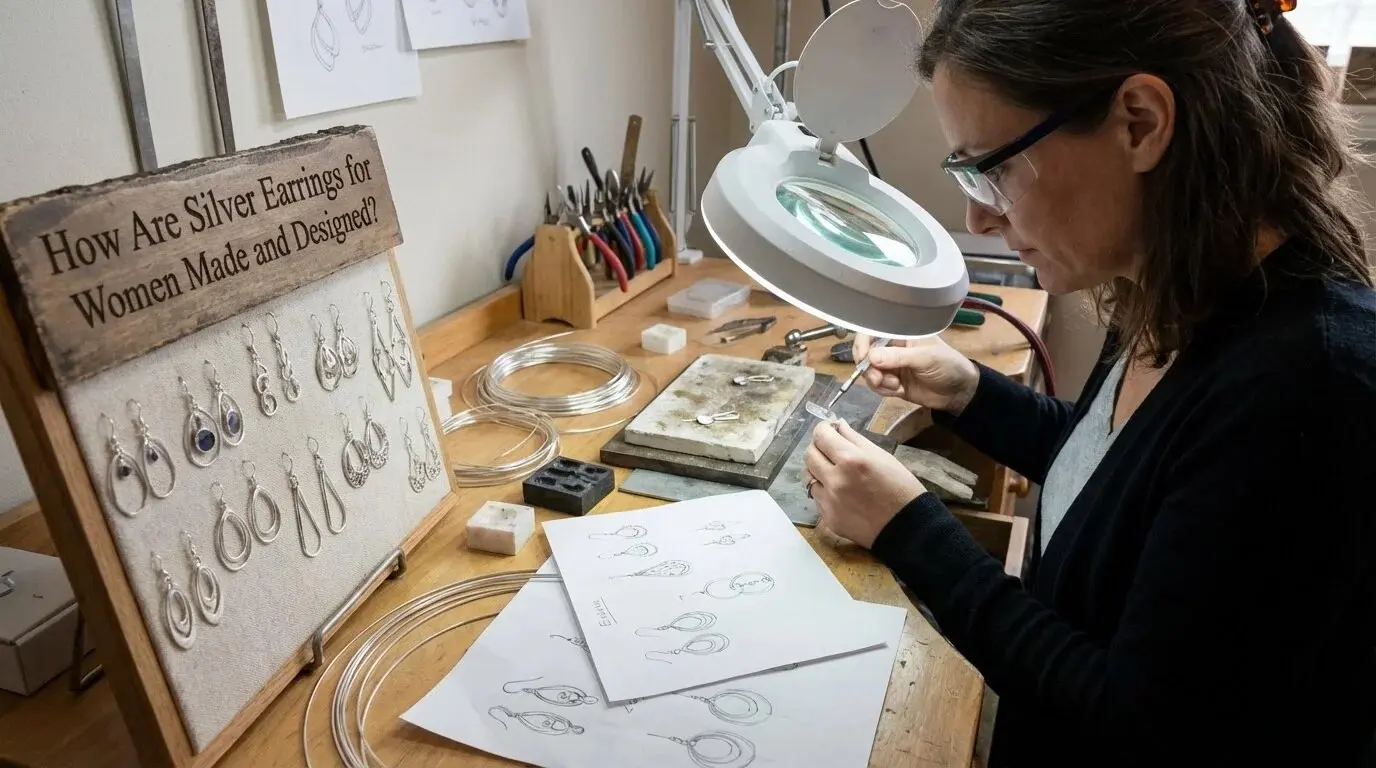
The creation of a metalwork piece requires an initial design phase. The process requires different approaches, which depend on the specific manufacturer. Designers create their sketches through two different methods, which include hand drawing on paper and digital 3D modeling with CAD software. Both methods can produce results, but designers now prefer CAD because of its ability to provide precise measurements and straightforward design modifications.
Designers think about several things during this stage. The designer needs to determine the earring weight, its hanging position, required closure type, and possible inclusion of decorative stones or other elements. The design process requires a balance between appearance and functionality. The design will need to meet comfort requirements because people do not want to experience earring weight or earlobe pulling through a whole day. The good design needs to create a balance between attractive appearance and comfortable use.
Designers pay attention to contemporary fashion trends when they design their collections. Designers observe current fashion trends to create their designs. However, many designers create fashion items that remain valid beyond specific trend periods. The classic designs maintain their popularity, which leads to continuous sales success throughout multiple years.
The Casting Process
The next production step after design finalization is casting. The method serves as the primary approach to making silver earrings. The explanation of the process proceeds through eight steps, which describe each stage of development.
The jeweler constructs an earring wax model as their first task. The model serves as an actual representation of what the completed earring design will be. The wax model gets placed inside a flask filled with a plaster-like material called investment. The closed flask enters the kiln after the investment material has completely hardened. The kiln process makes wax material disappear, creating an empty space that matches the earring design.
The cavity gets filled with molten sterling silver through a pouring or forcing process. The investment process breaks into pieces to show the raw silver object underneath. The technique known as lost wax casting has been in operation for several millennia. The method provides excellent results by enabling manufacturers to create intricate patterns that maintain uniformity throughout their production process.
Handcrafting and Fabrication
Earrings can be produced through two different methods, which include casting and fabrication. The process of fabrication includes several steps that require making earrings through the sculpting of silver sheets and wires. The process takes more time than casting, but it enables the creator to manage every element of the project.
The earrings created through the handcrafting process present a distinct tactile experience when compared with those produced through the casting method. The items display minor tool marks, which create distinct variations that result in a unique visual identity. The production of one-of-a-kind pieces appeals to many customers. This method is commonly used by small-batch jewelers and independent artisans.
Fabrication operations include various methods that need specific techniques to accomplish their goals. The visual result in the completed earring will change depending on the techniques used.
Adding Stones and Extra Details
Many earrings contain gemstones or cubic zirconia or decorative elements. Silver requires precise cutting to create stone settings. The three setting types used most frequently are prong settings, bezel settings, and channel settings.
Prong settings use small metal claws to hold a stone in place. Bezel settings wrap a thin strip of metal around the stone’s edge. Channel settings hold stones in a row between two strips of metal. Each method provides its unique appearance and different levels of safety.
The design includes elements of both craftsmanship through enamel work and engraving and decorative oxidation. Silver undergoes oxidation to create darkened areas, which result in visual contrast between light and dark parts of the silver surface. The treatment provides items with a timeless appearance that resembles vintage or rustic style.
Polishing and Finishing
Finishing work starts after the structural components of the earring have been completed. The piece reaches its stage as jewelry through this process. The piece gets filed, sanded, and polished in several stages. The process uses progressively finer abrasives to achieve surface smoothing.
The metal achieves its signature reflective quality through high polishing, which creates a mirror finish that people associate with silver. The high-polish process does not apply to all earring designs. Designers use matte finishes, brushed textures, and satin finishes to create different surface treatments. The finish selection determines which design style the earring will have while it also controls the overall visual impact of the design.
The earring hooks or clasps get attached to the base. The findings need to be designed to provide both safety and comfort to users. The majority of jewelers add a protective layer, which prevents tarnishing, to keep their silver items shiny.
Quality Control and Final Inspection
The customer receives their earrings after the product undergoes complete quality assessment procedures. The makers examine every item to find any defects, which include loose gemstones and dangerous sharp edges and fragile connections. The process is essential for reputable brands and artisans because they need to protect their brand image from customer returns and product complaints.
The production process adds hallmarks or stamps at this stage. A “925” stamp indicates the piece is genuine sterling silver. The small detail provides buyers with assurance about their purchasing decision.
The journey from raw silver to a finished pair of silver earrings for women involves real craftsmanship. Every step, from design to polishing, requires knowledge and care. Next time you pick up a pair, you’ll have a better understanding of everything that went into making them.