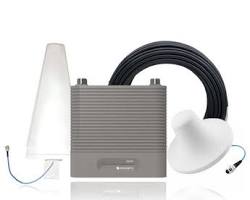
In an era where business continuity depends on uninterrupted connectivity, mobile coverage has quietly become a critical operational asset. Yet many organizations still treat signal quality as a facility issue rather than a strategic one.
At Digilog, we take a clear position: mobile signal boosters are no longer convenience tools — they are essential infrastructure for modern enterprises.
For professionals and decision makers, the conversation must shift from “Do we need better signals?” to “What is weak connectivity costing our organization?”
The Connectivity Gap Most Businesses Underestimate
Across emerging and mature markets alike, indoor mobile coverage remains inconsistent. High-efficiency buildings, dense urban environments, and remote industrial sites often block or weaken cellular signals.
In Pakistan, this challenge is particularly visible in:
- High-rise corporate offices
- Hospitals and healthcare facilities
- Manufacturing plants
- Warehouses and logistics hubs
- Underground parking and basements
While outdoor network coverage continues to improve, indoor reliability frequently lags behind — creating a hidden productivity drain.
The reality: Businesses rarely measure the cost of dropped calls, delayed communications, or unstable data — but the cumulative impact is significant.
A Strong Opinion: Connectivity Is Now a Core Business Utility
Electricity, internet, and security systems are universally recognized as mission-critical infrastructure. Mobile connectivity belongs in the same category.
Why? Because modern workflows depend on mobile networks for:
- Voice and video collaboration
- Cloud-based applications
- IoT device communication
- Field workforce coordination
- Customer engagement
When signal reliability falters, decision-making slows, customer experiences degrade, and operational risks increase.
Organizations that treat signal quality strategically gain a measurable competitive advantage.
Industry Insight: The Rise of Mobile-First Work Environments
The workplace has fundamentally changed. Even in office settings, employees increasingly rely on mobile connectivity rather than fixed lines.
Three major trends are accelerating the need for signal boosting solutions:
1. Hybrid Work and Mobility
Employees move between meeting rooms, floors, and buildings — requiring seamless connectivity everywhere.
2. Growth of IoT and Smart Facilities
Connected sensors, tracking systems, and automation tools depend on stable cellular coverage.
3. Customer Experience Expectations
In retail, healthcare, and hospitality, poor signal directly affects satisfaction and brand perception.
In short, connectivity is no longer just an IT concern — it’s a business performance variable.
Real-World Scenarios: Where Signal Strategy Delivers ROI
Corporate Headquarters: Productivity Gains
A large corporate office experiencing frequent call drops implemented a building-wide signal boosting system. The result was improved collaboration, fewer communication delays, and measurable efficiency gains across departments.
Healthcare Facility: Operational Reliability
Hospitals depend on real-time communication between staff. Enhanced indoor coverage ensures doctors, nurses, and support teams stay connected — improving response times and patient outcomes.
Manufacturing Plant: Safety and Coordination
In industrial environments, reliable connectivity supports worker safety, equipment monitoring, and logistics coordination.
These examples demonstrate a consistent pattern: improved signal strength directly supports operational resilience.
Why Mobile Signal Boosters Are the Most Practical Solution
While organizations often assume network issues must be solved by telecom operators, indoor coverage challenges are typically building-specific.
Mobile signal boosters provide a targeted solution by:
- Capturing existing outdoor signals
- Amplifying them intelligently
- Distributing consistent coverage indoors
Compared to complex infrastructure upgrades, boosters are:
- Faster to deploy
- More cost-effective
- Scalable as needs grow
For decision makers, this makes them one of the highest ROI connectivity investments available.
The Strategic Role of Technology Partners
Implementing a signal solution is not just about hardware — it requires planning, analysis, and optimization.
At Digilog, we’ve observed that successful deployments share three characteristics:
- Site-Specific Assessment – Every building has unique signal behavior.
- Right-Sized Solutions – Over- or under-specifying equipment reduces effectiveness.
- Ongoing Optimization – As usage patterns evolve, systems must adapt.
Organizations that partner with experienced providers achieve faster deployment and more reliable results.
Future Outlook: Connectivity as a Competitive Differentiator
Looking ahead, the importance of indoor mobile coverage will only increase.
Key drivers include:
- Expansion of 5G-enabled applications
- Increased reliance on real-time data
- Growth of smart buildings
- Rising expectations for seamless digital experiences
Companies that invest early in connectivity infrastructure position themselves to adopt new technologies faster and operate more efficiently.
Actionable Takeaways for Decision Makers
If you’re evaluating connectivity within your organization, consider these steps:
1. Audit Your Current Signal Performance
Measure coverage across floors, departments, and critical operational areas.
2. Quantify Business Impact
Identify where weak connectivity affects productivity, customer experience, or safety.
3. Treat Connectivity as Infrastructure
Include signal quality in facility planning and digital transformation strategies.
4. Choose Scalable Solutions
Select systems that can expand as your organization grows.
5. Work with Specialists
Partner with experienced providers who understand both technology and operational needs.
From Convenience to Strategic Asset
The conversation around mobile signal boosters has evolved. What was once considered a convenience technology is now a cornerstone of digital operations.
Organizations that prioritize reliable connectivity enable faster decisions, stronger collaboration, and better customer experiences. Those that ignore it risk hidden inefficiencies that compound over time.
At Digilog, our perspective is simple: strong connectivity is not just about better signal — it’s about better business performance.