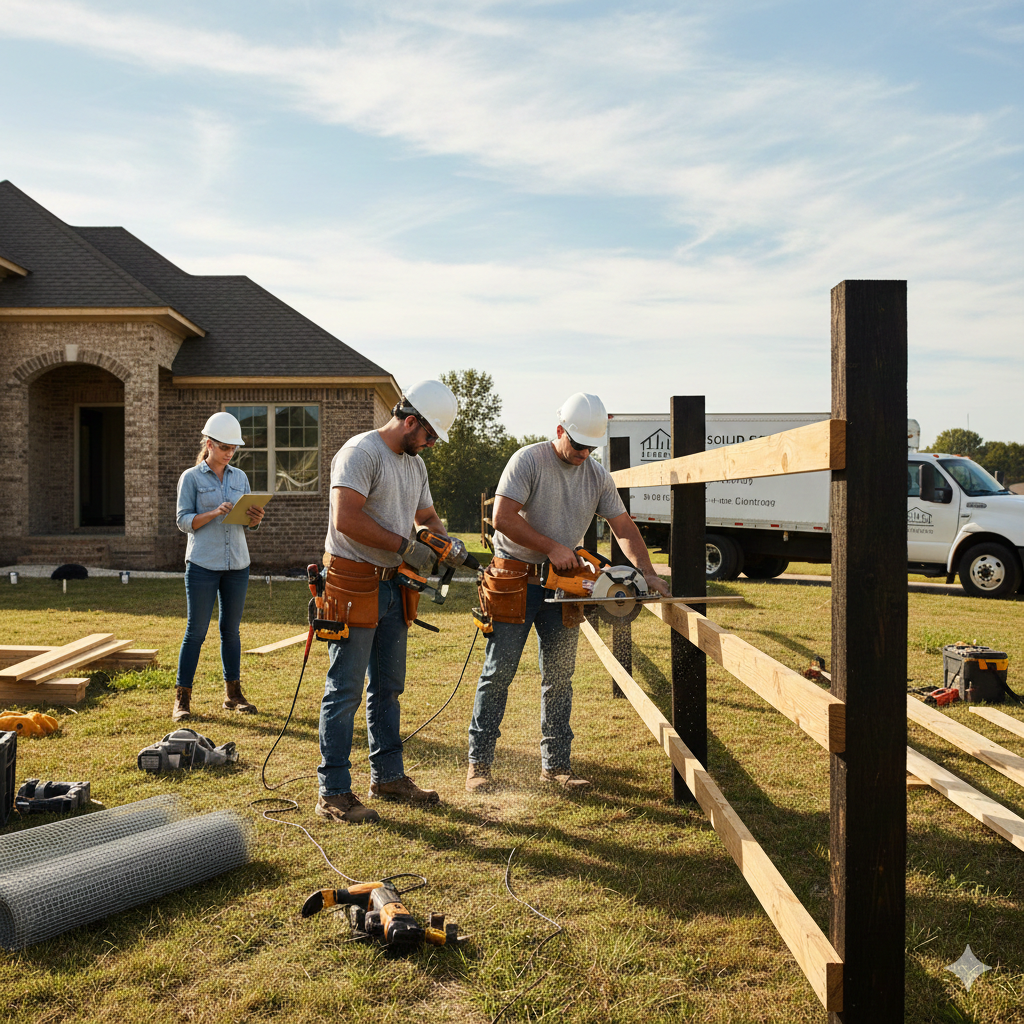
You want a fence that looks right, lasts, and fits your budget — and the quickest way to get that is by hiring a qualified fencing contractors who understand materials, permits, and site-specific challenges. A good contractor will save you time and money by providing clear quotes, handling permits, and delivering durable workmanship matched to your needs.
This article walks you through how to choose the right fencing contractor, what services to expect, and the questions to ask so you can compare bids confidently and avoid common pitfalls. You’ll learn practical steps to evaluate experience, warranties, and communication so your fence project finishes on schedule and meets your standards.
Choosing the Right Fencing Contractor
You need a contractor who communicates clearly, carries the right credentials, and has proven experience with the exact fence type you want. Verify insurance, inspect past installations, and read recent customer feedback before you sign a contract.
Qualities to Look For
Look for fence contractors who give written estimates with itemized costs for materials, labor, cleanup, and permits. A clear timeline with start and completion dates and a written change-order policy helps prevent surprises.
Prioritize companies that assign a single point of contact and respond within one business day to calls or messages. Ask about on-site supervision, subcontractor use, and warranty terms—get all promises in writing.
Value contractors who use samples or photos of completed work and who perform a site visit before quoting. Professionalism on-site—marked vehicles, safety practices, and tidy work areas—often indicates better long-term results.
Licensing and Insurance
Confirm the contractor holds the specific license required by your city or state for fence construction. Licensing verifies trade knowledge and often requires passing exams or meeting experience thresholds.
Ask for a current certificate of liability insurance and workers’ compensation. Call the insurer to confirm coverage limits and dates. Never let a crew work on your property without both forms of proof.
Request copies of any specialty certifications (e.g., concrete footings, ornamental iron welding) relevant to your fence type. Contractors who obtain permits on your behalf demonstrate familiarity with local code enforcement and reduce your risk.
Experience with Different Fence Types
Ask how many installations the contractor has completed for your chosen material—wood, vinyl, aluminum, chain-link, or masonry. Specific counts (for example, “40 cedar privacy fences last year”) reveal real experience.
Request photos or site addresses of recent, similar projects so you can inspect workmanship. Pay attention to post spacing, post-setting depth, rail attachment methods, and gate framing details during your review.
Discuss material brands, grade, and handling practices. Experienced contractors explain trade-offs—pressure-treated vs. cedar, powder-coated aluminum thickness, or vinyl profile strength—and recommend options that match your climate and maintenance tolerance.
Checking References and Reviews
Get at least three recent references with phone numbers and project details: address, fence type, installation date, and final price. Call and ask about communication, schedule adherence, cleanup, and whether any warranty issues arose.
Search online reviews across multiple platforms and filter for patterns—repeated praise or recurring complaints matter more than one-off comments. Look for photos in reviews; they often reveal quality issues that text alone does not.
Check with your local building department and homeowner association for complaints or permit violations. If you find negative reports, ask the contractor how they resolved the issues and request documentation of corrective work.
Fencing Contractor Services
A reputable contractor handles placement, material selection, permits, and post-installation care. You’ll get clear cost estimates, timelines, and warranty options for each service.
Fence Installation
You’ll receive a site survey that checks property lines, slopes, and underground utilities before work begins. Contractors typically handle permits, locate property pins, and mark utilities to avoid surprises.
Materials and methods matter. Expect options like pressure-treated wood, vinyl, aluminum, and chain-link, with explanations of lifespan, maintenance, and cost per linear foot. Installation steps include post setting (concrete or driven), panel or picket attachment, and gate fitting with hardware and latches.
Quality control focuses on consistent post spacing, plumb posts, and proper drainage at post holes to prevent rot. Ask for a written scope, start and completion dates, and cleanup terms. Insured crews and a workmanship warranty protect you against most defects.
Repair and Maintenance
You can book single repairs or seasonal maintenance plans for staining, tightening posts, or replacing pickets. Contractors assess rot, rust, leaning posts, and gate sag, then recommend spot repairs versus partial or full replacement.
Typical repairs include post replacement with concrete footing, board and rail replacement, repainting or staining, and hinge or latch replacement. For metal fences they’ll treat corrosion, straighten bent sections, and replace anchors.
Maintenance tips they provide often cover clearing soil away from posts, inspecting after storms, and reapplying protective coatings every few years. Get an itemized repair estimate that separates materials, labor, and permits so you know what you’re paying for.
Custom Fence Design
You’ll collaborate on design choices that balance privacy, aesthetics, and local code requirements. Contractors offer design consultations to match fence height, picket spacing, gate style, and decorative elements to your home and landscape.
They can create features like integrated planters, semi-privacy panels, lattice tops, or custom ornamental ironwork. Expect 2–3 design sketches or digital renderings, material samples, and cost comparisons for each option.
Custom projects include engineered solutions for slopes, retaining-wall integration, and noise-reduction panels. Ask for a detailed proposal with materials list, lead times for specialty items, and a payment schedule tied to milestones.