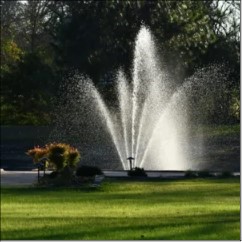
Healthy ponds depend on balanced oxygen levels, steady water circulation, and consistent biological activity. Without adequate aeration, stagnant conditions can develop quickly, leading to algae growth, unpleasant odors, and stress on aquatic life. Mechanical systems designed for circulation and surface agitation play a central role in maintaining ecological stability. A 3/4 hp pond fountain provides both visual appeal and functional aeration, helping ponds maintain higher dissolved oxygen levels while supporting long-term water clarity and overall environmental balance.
Understanding Aeration and Oxygen Transfer
Aeration refers to the process of increasing dissolved oxygen in water. Oxygen enters a pond naturally through wind movement and plant photosynthesis, but these sources may not be sufficient for larger or deeper bodies of water. Mechanical fountains accelerate oxygen transfer by moving water upward and exposing it to air. As droplets fall back to the surface, oxygen mixes into the pond. The continuous circulation generated by a 3/4 hp pond fountain ensures that oxygen is distributed evenly rather than remaining concentrated at the surface.
Surface Agitation and Gas Exchange
Surface agitation is critical for effective gas exchange. When water remains still, carbon dioxide accumulates, and oxygen levels decline. A fountain disrupts the surface tension, allowing trapped gases to escape while encouraging fresh oxygen absorption. The spray pattern increases contact between air and water, which enhances the rate of diffusion. This process benefits fish, beneficial bacteria, and aquatic plants. By sustaining active circulation, the fountain helps prevent thermal stratification, where deeper layers become oxygen-deprived and create harmful conditions.
The Role of Pump Capacity in Aeration
Pump performance determines how efficiently water moves through a fountain system. Flow rate and horsepower directly influence circulation strength and spray height. A properly matched pump allows consistent aeration without excessive turbulence. In many residential and commercial ponds, a 1600 gph pond pump delivers sufficient flow to maintain steady movement while supporting decorative spray patterns. The combination of adequate horsepower and optimized flow ensures that water is continuously lifted and redistributed, promoting even oxygen levels across the pond.
Balancing Flow and Energy Efficiency
Efficiency is essential when operating aeration systems continuously. A 1600 gph pond pump paired with the correct fountain assembly provides reliable circulation without unnecessary energy consumption. This balance helps maintain dissolved oxygen while controlling operational costs. When matched appropriately to pond size and depth, the system prevents stagnation and supports microbial activity that breaks down organic debris. Consistent movement discourages excessive algae growth by reducing nutrient accumulation in isolated areas of the water body.
Benefits for Aquatic Life
Fish and other aquatic organisms depend on dissolved oxygen for respiration. Insufficient oxygen can lead to stress, disease susceptibility, and mortality during warmer months when oxygen levels naturally decline. A 3/4 hp pond fountain supports stable oxygen concentration by maintaining circulation even during heat waves. Enhanced aeration strengthens the biological filtration process, enabling beneficial bacteria to decompose waste efficiently. This contributes to clearer water and a healthier ecosystem where fish can thrive without oxygen-related stress.
Supporting Beneficial Bacteria
Biological filtration relies on aerobic bacteria that require oxygen to break down ammonia and other waste byproducts. Increased oxygen availability improves the efficiency of these microbial communities. With consistent circulation, oxygen reaches deeper water layers, reducing the risk of anaerobic zones that produce foul odors. This balanced environment stabilizes nutrient cycles and supports long-term pond health. Reliable aeration minimizes sudden fluctuations that can disrupt the ecological equilibrium of the water system.
Improving Water Clarity and Reducing Odors
Stagnant ponds often develop murky water and unpleasant smells caused by decaying organic material. Continuous circulation disrupts these conditions by preventing debris from settling in concentrated areas. The upward flow created by the fountain redistributes nutrients and reduces localized buildup. As oxygen levels rise, aerobic decomposition accelerates, limiting the production of sulfur compounds associated with odors. The result is clearer, fresher water that enhances both visual appeal and environmental quality.
Seasonal Performance and Long-Term Stability
Seasonal temperature changes significantly impact oxygen solubility. Warmer water holds less dissolved oxygen, increasing the need for mechanical aeration. During summer months, a 3/4 hp pond fountain maintains circulation when natural oxygen levels are most vulnerable. In cooler seasons, continued movement helps prevent ice formation from sealing the surface entirely, allowing essential gas exchange. This year-round performance supports stable biological processes and protects aquatic life from abrupt environmental stress.
Conclusion
Effective pond management depends on maintaining balanced oxygen levels and consistent water movement. Mechanical aeration improves gas exchange, prevents stagnation, and strengthens biological filtration. A well-sized fountain system integrates circulation and decorative appeal while delivering measurable ecological benefits. By combining appropriate horsepower with a reliable 1600 gph pond pump, pond owners achieve steady oxygen distribution and improved clarity.